Table of Contents

Who This Blog Is For: If you keep waking up with a stiff neck and you’ve already blamed the pillow, swapped the mattress, and started sleeping more carefully, this blog is written for you. You turn your head slowly those first few minutes, lean on a hot shower or a heating pad to loosen up, and check the mirror gingerly before you trust your neck enough to back out of the driveway. It’s for people across Draper and the south end of the Salt Lake Valley who’ve realized this isn’t a one-off crick — it’s a pattern.
The alarm is bad enough without knowing the first thing you’ll feel is your neck. You lie there a moment doing the quiet math on how much it’s going to hurt to lift your head, and some mornings it sets the tone before the day’s even started. There’s nothing dramatic about a stiff neck — which is exactly why it wears on you. It’s small enough that you push through it, familiar enough that you’ve stopped mentioning it, and stubborn enough that “just sleep better” stopped being an answer a while ago. When the same stiffness is there most mornings, the repetition itself is the message: this isn’t bad luck with a pillow, it’s a pattern worth understanding.
Key Insights
- A one-off stiff neck from sleeping wrong is normal and usually clears on its own within a day or two.
- Stiff necks that return morning after morning are a different story — the repetition points to an underlying pattern.
- Your sleeping position is the spark, not the root; the same pillow strains an unbalanced frame more than a balanced one.
- The alignment of your upper neck is a structural contributor to how evenly your head and neck rest overnight.
- Upper cervical care in Draper UT works alongside your physician’s care, never in place of it.
Why Do You Keep Waking Up With a Stiff Neck?
Quick Answer: Waking up stiff usually reflects how your neck rested, not how long you slept. Your physician examines for causes like muscle strain, disc or joint changes, and pillow or position factors. A single rough night is normal. When it keeps happening, an overlooked contributor is structural: how evenly your head and neck settle when the alignment up top is off.
When a stiff neck is there most mornings, the pillow takes the blame first — and sometimes it earns some. But a pillow problem usually fixes itself once you change the pillow. When the stiffness keeps returning no matter what you sleep on, the position isn’t the whole story.
Your physician examines for the causes worth checking: muscle strain, changes in the cervical discs or joints, and the plain mechanics of your pillow and sleeping posture. That look matters, and it’s the right first step.
What a standard look doesn’t usually cover is how evenly your neck rests in the first place — whether the muscles that hold your head steady can actually switch off overnight, or whether they spend it quietly working. Your sleeping position is the spark. The overlooked contributor underneath it is structural, and it sits at the very top of the neck.
When to see a doctor first: A stiff neck with a fever and headache — especially if you can’t touch your chin to your chest — needs urgent medical care. So does neck pain after a fall or collision, or neck stiffness with numbness, weakness, or clumsiness in your arms or legs, or any change in bladder or bowel control. These aren’t morning-stiffness patterns; they need prompt medical attention.
Why the Same Stiffness Keeps Coming Back
Your neck holds up the weight of your head all day, and sleep is supposed to be its one long break. For a balanced neck, it is. But if the top of the neck carries a small misalignment, the muscles around it never fully stand down — they hold a low, steady tension through the night to keep your head in line. You don’t feel it while you sleep; you feel it in the first stiff minutes after you wake.
This is where neck pain and sleeping position genuinely matters: a pillow that’s fine for a balanced neck can concentrate that tension for one that’s already compensating. The pillow isn’t the villain — it just asks more of a neck already working overtime. And that’s the real tell. A stiff neck once in a while is noise; the same morning neck stiffness most days is a signal. If you’ve worked the obvious levers — a supportive pillow, better sleep posture, a decent mattress — and still wake up stiff, the problem isn’t the setup. It’s what the setup rests on. That’s where neck alignment and stiffness connect, and it’s about how you’re built right now, not years stacking up.
Where Alignment Comes Into It
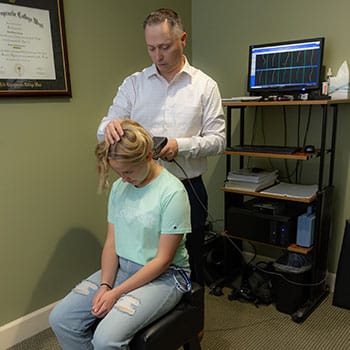
As an upper cervical chiropractor in Draper UT, Dr. Cheney looks specifically at the alignment at the top of the neck and how it shapes the way your head and neck rest and move. At Source Chiropractic and Wellness, he uses the Knee Chest method — a gentle, imaging-guided, side-specific approach that maps your individual anatomy before any low-force correction. There’s no forceful twisting or cracking of the neck.
The goal isn’t to chase the morning stiffness itself but to help your neck settle more evenly, so rest is actually restful. Many people find that upper cervical care in Draper UT fits alongside the medical care they already trust — adding to it, never replacing any part of it.
Start With Why It Keeps Happening
If your mornings keep starting with a stiff, aching neck and you’ve already upgraded the pillow and cleaned up how you sleep, the next useful step may be to look at what your neck is resting on in the first place. Exploring upper cervical care gives your neck a chance to settle more evenly at night — and looking at an upper-neck imbalance sooner may keep it from quietly shaping other patterns down the line. Our team at Source Chiropractic and Wellness offers a gentle evaluation to see whether your alignment is part of the picture.
When you’re ready, schedule a consultation with our upper cervical chiropractor in Draper.
Frequently Asked Questions
Why do I keep waking up with a stiff neck?
A single stiff morning usually comes from an awkward sleeping position and clears within a day or two. When it happens most mornings, the repetition points to something underneath — how evenly your neck rests, which is shaped in part by the alignment at the top of it. Your physician examines for muscle and joint causes; the structural side is worth evaluating alongside them.
How long should a stiff neck from sleeping wrong last?
Most resolve within a few days as the muscles settle and you move normally again. If yours routinely lingers longer than that, returns every week, or comes with other symptoms, it’s worth looking past the pillow — a stubborn, repeating pattern behaves differently from a one-off crick and deserves a closer look.
Can my pillow or sleeping position really cause this?
They contribute, but they’re rarely the whole cause. Neck pain and sleeping position interact — the same setup that suits a balanced neck can strain one that’s already compensating. If a new pillow helped only a little, that’s a clue the position isn’t the root, and something structural may be shaping how your neck rests.
Is it bad to crack my own neck when it’s stiff in the morning?
The quick relief is real but usually brief, and habitual self-cracking can become a loop — the urge returns because the underlying position hasn’t changed. It’s generally gentler to look at why the stiffness keeps returning than to keep resetting it by hand. If the urge to crack feels constant, that itself is worth mentioning at an evaluation.
What’s the difference between morning neck stiffness and something more serious?
Ordinary stiffness eases within minutes of moving and isn’t tied to other symptoms. The patterns that need a doctor’s attention are different: stiffness with fever and headache, neck pain after a fall or crash, or any numbness, weakness, or coordination changes in the arms or legs. When it stands alone and loosens with movement, it’s usually mechanical.
Can the alignment of my neck affect how stiff I wake up?
It can. Neck alignment and stiffness are connected through rest: if the top of the neck sits slightly off, the muscles that steady your head hold tension through the night instead of relaxing, and you feel that as stiffness in the morning — alongside, not instead of, the causes your physician evaluates.
To schedule a complimentary consultation with Dr. Cheney, call our Draper office at 385-331-7035. You can also click one of the buttons below.For English Consultation:
Para Consulta en Español:
About the Author