Table of Contents

Who This Blog Is For: If your back pain as you get older keeps coming back to wear and tear as the only answer, this blog is written for you. You had the imaging. Someone pointed at the screen and said the words you expected — degeneration, arthritis, normal for your age — and you accepted it. But it never explained the rest: why some weeks are fine and others you can’t bend to tie your shoes, or why one hip has sat a little higher than the other for as long as you can remember. If you’re in Draper or anywhere across the south end of the Salt Lake Valley and you’ve quietly wondered whether “it’s just age” is really the whole story, you’re in the right place.
You bend for something you’ve lifted a thousand times, and this time your back locks. Or you wake up stiff for no reason, when yesterday you felt fine. You’ve been told it’s age, and part of you has made peace with that. But something doesn’t add up: wear and tear is steady, and this comes and goes, favors one side, and never quite matches the picture on the film. That gap, between what you were told and what you feel, is worth a closer look.
Key Insights
- The wear-and-tear explanation for aging back pain can be true and still be incomplete.
- Imaging and pain often don’t match — same age, same X-rays, very different days.
- Everyday movements are the spark for a flare, not the deeper reason your back loads unevenly.
- The alignment of your upper neck shapes how your frame carries weight over time — a structural contributor worth checking.
- Upper cervical care in Draper UT works alongside your physician’s care, never in place of it.
Why Does Back Pain Get Worse As You Get Older?
Quick Answer: Back pain often gets worse with age because tissues change and everyday load adds up — and because conditions like degenerative disc changes, arthritis, or spinal stenosis become more common. Your physician evaluates those. A commonly overlooked contributor is how your frame has been carrying weight, which starts with the alignment of your upper neck.
When you start searching back pain as you get older, you expect one clean answer. But the back is a region, not a single diagnosis, so the reason it worsens depends on what’s driving it. Your physician looks first at the changes that become more common with time: degenerative disc changes, arthritis in the spinal joints, and narrowing called spinal stenosis. These are real, worth evaluating, and imaging is how they’re identified.
Everyday movements — bending to lift, twisting to reach the back seat, standing up from a low chair — are the spark that sets off a flare, not the underlying reason. A rough week often follows an ordinary motion you’ve made ten thousand times before.
The commonly overlooked contributor is structural: how your body has been distributing its weight, year after year. And weight distribution starts higher than most people look — at the alignment of the upper cervical spine, the top of the neck.
Why Imaging and Pain Don’t Always Match
Here’s what surprises most people: the picture on the screen and the pain you feel are only loosely related. Studies of people with no back pain at all routinely find disc bulges, degeneration, and arthritis on their scans. Two people the same age, with nearly identical imaging, can live completely different days.
So if the films don’t fully predict the pain, something else is shaping it. Part of why back pain gets worse with age is not the picture on the film but the load behind it — how evenly your frame has carried you across the decades. A balanced body spreads wear broadly; a body compensating for a small imbalance concentrates it, and concentrated load felt over thirty or forty years is exactly what “it’s just age” quietly absorbs.
How Small Imbalances Add Up Over Decades
When the top of the neck sits slightly out of alignment, your body adapts to keep your head level and your eyes on the horizon. A subtle head tilt. A shoulder that rides a little higher. A pelvis that levels itself to compensate, which is often why one hip has sat higher than the other.
None of this hurts at 30. That’s the point. These compensation patterns are quiet and they work, in the short term. But they change how weight travels down your spine, loading some joints and discs more than others. Over decades, the areas doing the extra work wear first. What looks like ordinary aging can partly be the accumulated cost of a frame working harder on one side than the other. This is where back pain and spinal alignment intersect — and it’s the piece a standard workup, focused on the painful area itself, isn’t built to look for.
What Upper Cervical Care Looks At
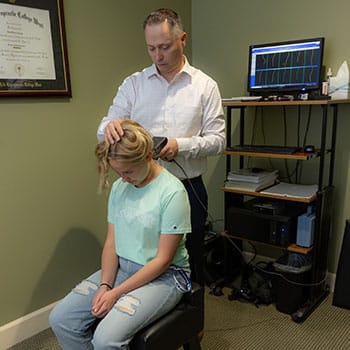
As an upper cervical chiropractor in Draper UT, Dr. Cheney focuses narrowly on the alignment at the very top of the neck and how it relates to the rest of your posture and frame. At Source Chiropractic and Wellness, he uses the Knee Chest method — a gentle, imaging-guided, side-specific approach that maps your individual anatomy before any low-force correction is made. There’s no twisting or popping of the neck or back.
The aim isn’t to chase the sore spot but to give your structure a more balanced foundation, so weight travels more evenly and overworked areas get relief from the constant extra load. Many people find that upper cervical care in Draper UT fits naturally alongside the medical care they already trust — adding to it, never replacing any part of it.
Give an Aging Back a More Even Foundation
If your back pain as you get older has never quite matched what the imaging shows, the most useful next step may be to look past the sore spot to how your whole frame carries you. Exploring upper cervical care gives your body a chance to work from a more balanced foundation — and addressing an upper-neck imbalance sooner may keep those compensation patterns from quietly loading other areas down the road. At Source Chiropractic and Wellness in Draper, Dr. John Cheney offers a gentle evaluation to see whether your alignment is part of the story.
Schedule your consultation with our chiropractor in Draper today.

Frequently Asked Questions
Why does my back hurt more now that I’m older?
Some of it is ordinary: tissues change with age and everyday load accumulates. But “older” rarely explains the whole pattern on its own — especially the part where the pain comes and goes, or doesn’t match your imaging. How your body has been distributing weight over the years plays a role too, and that’s worth evaluating alongside the medical picture.
Is back pain just a normal part of getting older?
Common, yes — but “normal” and “nothing can be looked at” aren’t the same thing. Age-related changes are real, and your physician evaluates them. That doesn’t mean the only option is to accept it as is. Understanding why back pain gets worse with age, including the structural side, simply gives you more to work with.
Can my neck really have anything to do with my lower back?
It can contribute. The alignment of your upper neck influences how your whole frame balances and carries weight, so an unaddressed imbalance up top can change how load travels all the way down — alongside, not instead of, the conditions your doctor evaluates. This is the link between back pain and spinal alignment that’s easy to overlook.
How would I know if my back pain is connected to alignment rather than just age?
Clues include pain that doesn’t match your imaging, a hip or shoulder that has always sat higher, an old head or neck injury, or flares that seem out of proportion to what you did. None confirms an alignment link on its own, but together they’re worth noticing. A focused upper cervical evaluation, which looks at posture and alignment rather than only the painful area, is the clearest way to find out.
Does upper cervical care replace seeing my doctor about back pain?
No. It works alongside your physician’s care. Your doctor evaluates and manages conditions like degenerative disc changes, arthritis, and stenosis; upper cervical care simply looks at a structural contributor many workups don’t examine — how your frame is balanced and loaded.
Isn’t some back pain and posture change just unavoidable with age?
Some change is expected, and good posture habits help everyone. But posture isn’t only a habit — it’s partly shaped by how your frame is aligned. When back pain and posture keep drifting despite your best efforts, an underlying alignment pattern may be part of why, and that’s something an evaluation can check.
I’ve had this for years. Is it too late to do anything?
It’s rarely too late to give your body a more balanced foundation. Long-standing patterns can take longer to respond, and results vary from person to person depending on what’s involved. An evaluation is how you find out what’s realistic in your situation — not a guarantee of any particular outcome.
Is upper cervical care gentle enough for an older spine?
The Knee Chest approach uses gentle, low-force corrections guided by imaging rather than forceful twisting. As with any care, an evaluation comes first to determine whether you’re a good candidate before anything is done. If you’re looking for an upper cervical chiropractor in Draper UT, that evaluation is the place to start.
To schedule a complimentary consultation with Dr. Cheney, call our Draper office at 385-331-7035. You can also click one of the buttons below.For English Consultation:
Para Consulta en Español:
About the Author