Table of Contents

Who the Blog is For: If you’ve been searching migraines getting more frequent, hoping for something past the same trigger lists, this blog is written for you. You’ve done the work — cut the usual foods, protected your sleep, dimmed the screens, kept the diary — and the count has climbed anyway. It’s for people across Draper and the south end of the Salt Lake Valley who feel like they’re failing at something they’ve actually been diligent about, and who want to understand the piece a trigger list doesn’t cover.
You mark another one on the calendar and realize it’s the third this month, when it used to be one. You’ve changed nothing — if anything you’ve been more careful — so the math doesn’t add up. There’s a particular frustration in doing everything right and watching the problem grow anyway, as if you’ve missed some obvious trigger everyone else figured out. You haven’t. When migraine days multiply despite real effort, it usually means something is lowering the bar, not that you’ve failed to find one more thing to avoid.
Key Insights
- More frequent migraines usually mean your threshold has dropped, not that you’ve missed a trigger.
- Everyday triggers are the spark for an episode — they don’t set how easily that spark catches.
- Stress, sleep debt, screen hours, and one overlooked structural contributor can converge to lower the bar.
- The alignment of your upper neck is a structural contributor to that threshold, worth checking.
- Upper cervical care in Draper UT works alongside your neurologist’s or physician’s care, never in place of it.
Why Are My Migraines Getting More Frequent?
Quick Answer: Migraines often grow more frequent when something lowers your threshold — the margin that decides how easily an episode sets off. Your physician evaluates medical reasons like medication-overuse headache, hormonal shifts, and new sleep or stress load. Everyday triggers are the spark. A commonly overlooked contributor is structural: how your upper neck influences that threshold.
When you search why are my migraines getting worse or more frequent, you want one missing trigger to blame. But a migraine isn’t set off by triggers alone — it’s set off when a trigger meets a lowered threshold. That distinction is the whole answer.
Your physician looks first at the recognized reasons frequency climbs: medication-overuse headache, where frequent pain-relief use quietly feeds the cycle; hormonal shifts; new or worsening sleep and stress load; and other neurological factors worth evaluating. These are real, and they’re what a medical workup is built to check.
Everyday triggers — a skipped meal, a short night, screen glare, a weather swing — are the spark. They aren’t the reason the spark catches so easily now. The commonly overlooked contributor to that is structural: how your body is loaded and balanced, which starts at the top of the neck.
What Sets Your Migraine Threshold
Everyone has a threshold — a margin that decides how much it takes before an episode develops. On a high-margin day, you can skip lunch, sleep badly, and stare at a screen for nine hours and be fine. On a low-margin day, one of those is enough.
Frequency climbs when your margin shrinks. And margin isn’t eaten by one big thing; it’s eaten by convergence — stress, sleep debt, screen hours, and structural load all pressing at once, so the bar sits lower and the same ordinary spark clears it more often. That’s why the diary feels maddening: the trigger you logged really did set off the episode, but only because the bar was already low. Chase the spark and you miss the margin.
Where the Upper Neck Comes In
One input to that margin is structural, and it’s the one a trigger list can’t include. The alignment of your upper neck shapes how evenly your body carries and balances load. When the top vertebrae sit slightly off, the surrounding muscles and joints work harder to keep your head level, and your system spends margin it would otherwise keep in reserve.
This is where neck alignment and migraines intersect. It’s also where migraines and posture connect — long hours with your head carried forward at a screen add to the same load, which is why a demanding stretch at work can line up with a run of worse weeks. None of this is a cause of migraine; it’s one structural contributor to the threshold that decides how often the door opens.
What Upper Cervical Care Looks At
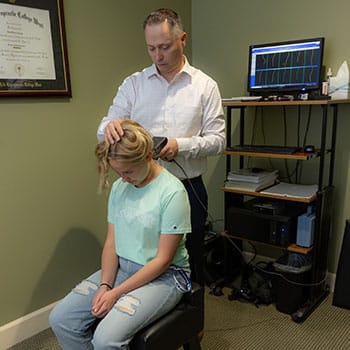
As an upper cervical chiropractor in Draper UT, Dr. Cheney focuses narrowly on the alignment at the top of the neck and how it relates to your posture and overall balance of load. At Source Chiropractic and Wellness, he uses the Knee Chest method — a gentle, imaging-guided, side-specific approach that maps your anatomy before any low-force correction. There’s no twisting or popping.
The aim isn’t to chase individual triggers but to help your structure carry load more evenly, so your body holds on to more of its margin. Many people find that upper cervical care in Draper UT fits alongside the medical care they already trust — adding to it, never replacing any part of it.
Give Your Threshold Some Room
If your migraine days have been climbing no matter how carefully you manage triggers, the most useful next step may be to look at the layer a trigger list can’t reach. Exploring upper cervical care gives your body a chance to carry load more evenly and hold on to more of its margin — and looking at an upper-neck imbalance sooner may keep it from quietly feeding the pattern. At Source Chiropractic and Wellness in Draper, Dr. John Cheney offers a gentle evaluation to see whether your alignment is part of the story.
When you’re ready, schedule a consultation to take the next step.
Frequently Asked Questions
Why are my migraines getting more frequent?
Rising frequency usually means your threshold has dropped — the margin that decides how easily an episode sets off — rather than a single trigger you’ve missed. Your physician evaluates medical reasons like medication-overuse headache, hormonal shifts, and sleep or stress changes. How your body carries structural load, starting at the upper neck, can be part of the picture too.
Is it normal for migraines to become more frequent over time?
It’s common, but common doesn’t mean nothing can be looked at. When the count climbs, it’s worth having your physician check the medical reasons and also considering what’s lowering your threshold — including structural load — so you’re not left simply adding more things to avoid.
Why are my migraines getting worse instead of better even though I avoid my triggers?
Because triggers are the spark, not the threshold. Avoiding triggers lowers how often you light the match; it doesn’t raise the bar for how easily the match catches. If that bar has dropped — from stress, sleep debt, or structural load — the triggers you can’t fully avoid will set off an episode more easily. Both layers matter.
Should I stop avoiding my migraine triggers, then?
No — keep what works. Managing triggers is genuinely useful and worth continuing. The point isn’t that trigger control is pointless; it’s that it works on one layer. If your frequency is climbing despite good trigger habits, that’s the signal to look at the threshold layer too, not to abandon the habits you’ve built.
Can my neck really affect how often I get migraines?
It can contribute. The alignment of your upper neck influences how evenly your body carries load, and that structural load is one input to your threshold. An unaddressed imbalance can mean your system holds less margin in reserve — alongside, not instead of, the medical factors your physician evaluates. This is the link between neck alignment and migraines that’s easy to overlook.
Could my posture at work be making my migraines more frequent?
It can be part of it. Long hours with your head carried forward at a screen add steady load to the neck and shoulders, which spends margin. That’s the connection between migraines and posture — not a direct cause, but a contributor that stacks with stress and screen time to lower the bar. Small changes to your setup, alongside an alignment check, can help.
Is upper cervical care gentle enough to try while my migraines are frequent?
The Knee Chest approach uses gentle, low-force corrections guided by imaging rather than forceful twisting, and an evaluation always comes first to see whether you’re a good candidate. If you’re looking for an upper cervical chiropractor in Draper UT, that evaluation is the place to start.
Schedule your consultation with a chiropractor in Draper today.
To schedule a complimentary consultation with Dr. Cheney, call our Draper office at 385-331-7035. You can also click one of the buttons below.
For English Consultation:
Para Consulta en Español:
About the Author