Table of Contents

Who This Blog Is For: Jaw pain that shows up years after an accident, a fall, or a hard hit on the field is more common than most people realize. This blog is for readers across Draper, Sandy, Riverton, South Jordan, and Bluffdale who have tried the night guard, been told their jaw looks structurally fine, and still want to understand why the pain settled in when it did.
You may not connect the two events at all. The snowboard fall was six winters ago; the jaw pain started last spring. The rear-ending on I-15 barely bruised you, and the clicking began a year later. So you do what makes sense — wear the guard at night, stop chewing gum, learn to yawn carefully — and the ache stays anyway, a low background noise you have organized your day around. When jaw pain persists after the obvious things have been addressed, part of the picture usually has not been looked at yet.
Key Insights
- Jaw pain that begins long after an injury is not a coincidence, and it does not mean the injury was minor.
- Chewing, clenching, and long dental visits spark a flare-up; they are not the reason the jaw is struggling.
- An injury can leave the top of the neck slightly out of alignment, which influences how evenly the jaw joint loads.
- Upper cervical care works alongside your dentist and physician — never in place of them.
What’s Behind TMJ Pain, and Where Does an Old Injury Fit?
Quick Answer: TMJ pain has several recognized sources — teeth grinding, disc displacement inside the joint, arthritis, muscle strain, or direct trauma to the jaw — and your dentist evaluates these. A commonly overlooked contributor is the upper neck. An old injury can leave the top of the spine slightly misaligned, and that alignment may keep the jaw loading unevenly.
TMJ describes where the trouble shows up, not a single diagnosis, so the reason it persists depends on what drives it. Your dentist looks first at the recognized sources: bruxism, the grinding and clenching of teeth; displacement of the small disc inside the joint; arthritis in the joint surfaces; muscle strain; and direct trauma to the jaw.
Everyday triggers — tough food, a long dental appointment, a stressful week of clenching, a wide yawn — set off a flare-up. They are the spark, not the reason the joint became sensitive.
The overlooked contributor sits above the jaw rather than in it. The top two vertebrae carry the head’s weight, and when they hold a slight misalignment, the muscles of the head and face adapt.
How Does an Injury From Years Ago Still Affect the Jaw Today?
Most injuries that matter here never touched the jaw. Jaw pain after a car accident in Draper often works this way: the head moves fast, the neck absorbs it, and the top of the cervical spine settles slightly off from where it started. A fall on the trail above Corner Canyon can do the same.
Your body is built to adapt. To keep your eyes level and your head balanced, it borrows — a subtle head tilt, extra tension along the jaw and temples, a shift in the shoulders. None of it is a decision you made.
The jaw joint is sensitive to that borrowing. It hangs from the skull just below the ear and tracks correctly only when the head sits squarely on the neck. When the head carries a small tilt for years, the two sides of the jaw stop sharing the work evenly.
Why Does TMJ From a Past Injury Persist for So Long?
Left unaddressed, compensation patterns reinforce themselves. One set of muscles tightens, a neighboring set takes up the slack, and posture settles into the adaptation until it feels normal. This is often why whiplash and jaw pain in Draper appear years apart in someone’s history and are never connected.
None of this is a reason to stop the care you already receive. A night guard protects your teeth. Physical therapy restores motion. Your dentist evaluates the bite and the joint itself, and each addresses what it is designed to check.
The point is narrower. When jaw pain persists after those pieces have been handled well, the alignment of the upper neck is worth evaluating too, because it falls outside the scope of a standard jaw workup.
How Does Upper Cervical Care for TMJ in Draper UT Work?
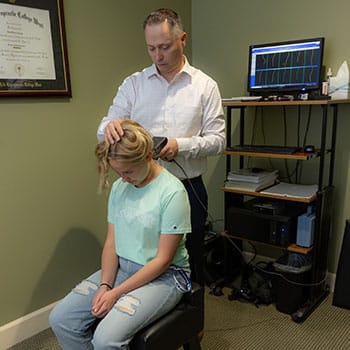
Upper cervical care focuses on the alignment of the top of the neck and how it relates to the rest of your posture. At Source Chiropractic and Wellness, imaging is taken before any correction, so the approach is mapped to your anatomy. The corrections are gentle, low-force, and specific — no twisting of the neck.
The aim is not to chase the jaw but to support the structure above it, so the head sits more evenly and the joint has a fairer chance to work as it was built to. Many people find that upper cervical care for TMJ in Draper fits alongside the dental care they already have, adding to it rather than replacing it.
Trace Your Jaw Pain Back to Where It Started
If your jaw has ached since an injury you had almost forgotten, the most useful step is to stop chasing each flare-up and look at what may be feeding the pattern. Searching for a TMJ chiropractor in Draper is a reasonable place to start, and addressing an upper-neck misalignment sooner may keep those compensation patterns from quietly contributing to headaches or neck tension down the road. At Source Chiropractic and Wellness in Draper, Dr. John Cheney offers a gentle evaluation to see whether your alignment is part of the story.
Schedule your consultation with a chiropractor for TMJ in Draper today.
Frequently Asked Questions
Can an injury from years ago still affect my jaw?
It can. The body adapts to an injury quickly, and those adaptations often outlast the original soreness by years. If your jaw pain began long after an accident, the two may still belong to the same story, and both the dental and structural pieces are worth evaluating.
I never hurt my jaw directly. How could an injury be involved?
Most people with this pattern never took a hit to the face. A whiplash-type movement, a fall, or a concussion moves the head and neck, not the jaw. Because the jaw joint hangs from the skull, how the head sits on the neck influences how evenly that joint loads.
How would I know if my jaw pain is connected to my neck?
Clues include a history of a car accident, fall, sports injury, or concussion; ongoing neck tension or stiffness; headaches that start at the base of the skull; clicking that is worse on one side; or jaw pain that persists after your dentist has evaluated the joint and bite. No single clue confirms a neck link, but together they are worth noticing. A focused upper cervical evaluation, which looks at alignment and posture rather than the jaw alone, is the clearest way to find out.
Is my night guard still worth wearing?
If your dentist prescribed one and it helps, there is usually no reason to stop. A guard protects the teeth from grinding. Upper cervical care is not a substitute for it — the two look at different parts of the same problem.
How long might it take to notice a difference?
It varies from person to person, depending on how long the pattern has been present and what else is involved. Some people notice changes within a few weeks, while others take longer. Your care plan is shaped by what your evaluation shows.
What does an upper cervical evaluation actually involve?
It begins with your history, including old injuries you may not think are relevant, followed by an examination of posture and alignment and imaging of the upper neck. Nothing is done until that evaluation shows whether a misalignment is present and whether care is appropriate for you.
Is upper cervical care gentle enough if my jaw is already painful?
The corrections are low-force and guided by imaging, and nothing is directed at the jaw joint itself. As with any care, an evaluation comes first to determine whether you are a good candidate.
To schedule a complimentary consultation with Dr. Cheney, call our Draper office at 385-331-7035. You can also click one of the buttons below.
For English Consultation:
Para Consulta en Español:
About the Author